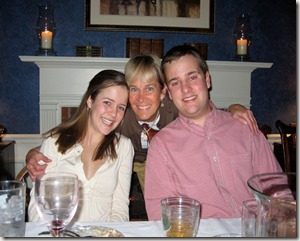
Dr. Steven Strongwater, Atrius Health President & CEO, testified last week at the Massachusetts State House before Senator James Welch and Representative Jeffrey Sanchez, co-chairs of the Joint Committee on Health Care Financing, who also chair the state’s Provider Price Variation Commission. Atrius Health was among a number of groups testifying at last week’s hearing including representatives from the Massachusetts Medical Society, union and consumer groups, and community hospitals. The Commission is slated to release its final report and recommendations on March 15th.
Dr. Strongwater pointed out that the Commission’s focus on unwarranted price variation should be on hospital prices rather than physician prices for two primary reasons:
- Hospital prices drive the largest portion of controllable expenses and they have been increasing despite our many efforts to reduce costs like triaging to community hospitals, deploying unsubsidized programs to care for patients in their homes, and by offering extended urgent care. About 68% of total medical expense (TME) lies outside of Atrius Health’s direct control (e.g. hospital inpatient, hospital facility outpatient care, and emergency department care and prescription drug costs).
- Within healthcare systems, the hospitals often subsidize their referring physician groups. With this as a “hidden” source of revenue for the physician groups, it would be very complicated to find any solution that would be equitable for independent groups, like Atrius Health, which are not subsidized in any way.
In his comments, Dr. Strongwater also pointed out a number of suggestions that the state should consider to address rising health care costs and provider price variation including the following:
- Promoting the Right Site of Care – The state could measure and publish the percentage of healthcare provided in academic medical centers for procedures that could be treated in community settings and trend referral patterns of care.
- Risk adjustment methodology – We believe that a better risk adjustment methodology (e.g. inclusive of socio-economic factors) is needed and should be applied consistently across all payers to ensure that TME is truly comparable. Even when they use the same tool (e.g. DXcG), payers are applying it differently today.
- Site-Neutral Payments – We support efforts by the state to equalize payments for the same services provided by hospital outpatient departments and physician offices.
- Preferred Provider Organization (PPO) Attribution – There is an opportunity for the state to better track TME for PPO products. A PPO attribution methodology was agreed to by many of the larger health plans and provider organizations several years ago. If the Center for Health Information Analysis (CHIA) asks the health plans to use this methodology and provide CHIA with the attributed medical group for each patient, then CHIA can compare TME for PPO products as well as HMO products.
- Reference Pricing – We suggest that the state’s Group Insurance Commission (GIC) be a leader in reference pricing for standard procedures as a way to re-align the market and address provider price variation and achieve the kinds of savings The California Public Employees Retirement System (CalPERS) has achieved.
- End of Life Care – Spending in the last six months of life is concentrated on inpatient acute-care hospitals which in most cases are nearly three times more expensive than in other settings. We believe that significant opportunity exists to reduce health care costs for patients at the end of life and that additional analysis and policy recommendations should be considered.
- Telemedicine – The administration, legislators and the Health Policy Commission (HPC) should help foster reforms on both the state and federal level that lead to reimbursement for innovative technologies, such as telemedicine, that can drive down TME.
- Hospital rates should not just be applied across a system, but should be priced according to services they provide and adjusted as appropriate for teaching, acuity levels of patients, and geography.
Dr. Strongwater concluded his remarks by thanking Chairmen Welch and Sanchez on the Commission’s work and offered to serve as a resource.

/pic9702455.jpg)


![Yuri Semenov YS Stereo Makeup v1.0.1 WiN Mac [FREE]](http://audioz.download/uploads/posts/2026-07/thumbs/1784473270_755743290.webp)
![Xamã & LUDMILLA – Moça – Single [iTunes Plus M4A]](http://i.imgur.com/olB1GdD.png)